The Maryland Lacrosse Player's Complete ACL Prevention Guide
The Maryland Lacrosse Player's Complete ACL Prevention Guide
Why Female Lacrosse Players Face Higher ACL Risk, and How to Build Bulletproof Knees
Maryland lacrosse players dominate nationally. Johns Hopkins, Maryland, Loyola, UMBC - the best collegiate programs call this state home. But Maryland's lacrosse excellence comes with a hidden cost: women's lacrosse shows the highest ACL injury rate among NCAA sports at 0.23 injuries per 1,000 athlete-exposures, with 82.5% occurring through non-contact mechanisms during cutting and pivoting.
You plant to dodge your defender. Your knee buckles inward. The season ends in that instant.
Research tracking high school athletes found ACL injury rates increased 26% over 15 years, with girls' lacrosse showing 10.4 injuries per 100,000 exposures. Among female lacrosse players, 90.5% of ACL injuries result in complete tears requiring surgical reconstruction and 6-12 months away from the field.
The good news: neuromuscular training reduces ACL injury risk 44-73% when implemented consistently. Maryland lacrosse players can build resilient knees capable of withstanding the sport's unique demands through targeted prevention programming addressing the biomechanical deficits that predict injury.
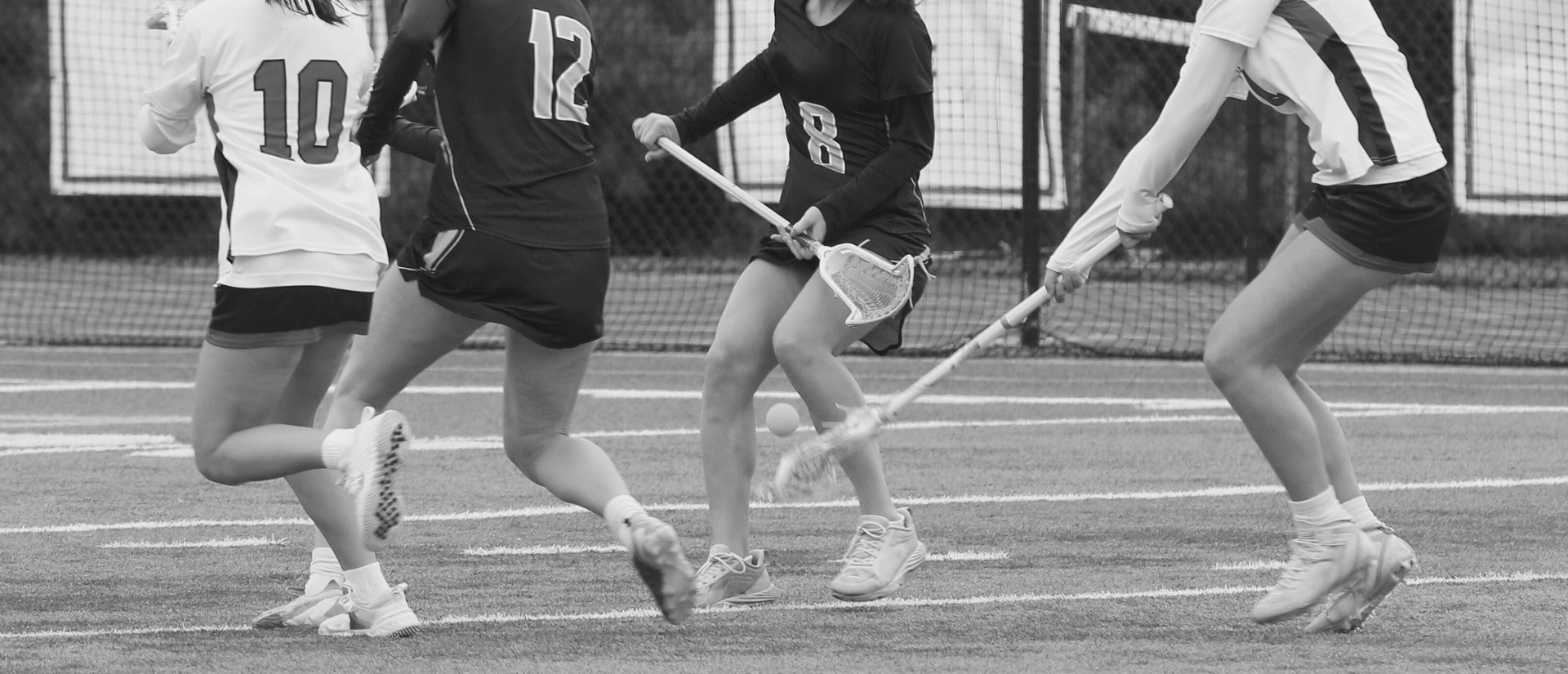
Lacrosse's rapid cutting and pivoting movements create high ACL injury risk, particularly in female athletes
Knee injuries represent 20% of all female lacrosse injuries (46.6% are ACL tears, most occurring in competition vs. practice)
Prevention programs reduce ACL tears 44-73% when including landing stabilization, Nordic hamstring curls, and deceleration training
What Makes Lacrosse ACL Injury Risk Unique
Lacrosse combines the worst ACL injury risk factors into single movements repeated hundreds of times per game:
High-Speed Cutting with Stick: Unlike basketball or soccer where athletes cut freely, lacrosse players execute directional changes while cradling, passing, or shooting. The stick creates rotational forces through the torso that transfer to the knee, amplifying valgus stress (inward knee collapse) during cutting.
Deceleration Under Pressure: Defensive players must decelerate rapidly from sprint speed to mirror offensive cuts. Research shows the deceleration phase generates 2-3x bodyweight forces through the knee joint, with peak loading occurring when the knee is most vulnerable (15-30° flexion).
Asymmetric Loading Patterns: Right-handed players consistently plant their left leg during dodges and shots. Left-handed players overload the right. This chronic asymmetry creates strength imbalances and movement compensations that accumulate over seasons.
Fatigue During Tournament Weekends: Maryland youth and high school lacrosse culture emphasizes multi-game tournament weekends. Athletes playing 3-4 games across two days show significantly degraded landing mechanics and neuromuscular control during late-game situations when most ACL injuries occur.
Contact After Non-Contact Injury Mechanism: While women's lacrosse prohibits body checking, incidental contact frequently occurs immediately after an athlete has already loaded their knee awkwardly. The secondary contact on an already-compromised position increases catastrophic injury risk.
High school data reveals knee injuries represent 20% of all female lacrosse injuries, with most occurring during competition rather than practice. This pattern suggests game-speed intensity and reactive decision-making—not just volume—drive injury risk.
ACL Injury Risk Factors Specific to Female Lacrosse Players
Anatomical Factors
Q-Angle and Pelvic Width: Female athletes' wider pelvises create larger Q-angles (angle from hip to knee to ankle), placing the ACL under greater strain during cutting. Research shows every 5° increase in Q-angle correlates with increased knee valgus during landing.
Intercondylar Notch Width: The space housing the ACL inside the knee is typically smaller in female athletes, potentially increasing contact and strain on the ligament during rotational movements.
Hormonal Influences: Some evidence suggests ACL laxity varies across menstrual cycle phases, though research remains inconsistent. Female athletes may experience increased joint laxity during certain phases, theoretically increasing injury susceptibility.
Neuromuscular Factors
Quadriceps Dominance: Female athletes tend toward quadriceps-dominant movement strategies during landing and deceleration. Excessive quadriceps activation without corresponding hamstring co-contraction creates anterior tibial translation, stressing the ACL.
Ligament Dominance: Athletes relying on passive restraints (ligaments) rather than active muscle control to stabilize joints demonstrate higher injury rates. This pattern manifests as landing with minimal knee flexion, transferring force directly to ligamentous structures.
Leg Dominance: Asymmetric strength and neuromuscular control between limbs creates compensation patterns. Lacrosse's sport-specific demands amplify these imbalances—right-handed players consistently overload their left leg during dodges.
Trunk Control Deficits: Lateral trunk lean during cutting increases knee abduction moments (forces pushing the knee inward). Female athletes demonstrate greater trunk displacement than males during directional changes, concentrating stress at the knee.
Training and Load Management Factors
Specialization Without Foundation: Maryland youth athletes often specialize in lacrosse year-round before developing fundamental movement competencies. Early specialization without addressing landing mechanics and strength foundations increases long-term injury risk.
Tournament Load Spikes: Weekend tournaments create acute workload spikes—athletes accustomed to 2-3 practices weekly suddenly play 3-4 games in 48 hours. These spikes exceed tissue tolerance, particularly when occurring repeatedly across a season.
Insufficient Off-Season Strength Training: Many programs emphasize stick skills during off-season rather than building physical resilience. Without dedicated strength training addressing muscular imbalances, athletes enter each season underprepared for competitive demands.
The True Sports ACL Prevention Program for Lacrosse
True Sports Physical Therapy's lacrosse-specific ACL prevention program addresses the biomechanical deficits and movement patterns that predict injury. The program has helped Maryland lacrosse players including Max Seibald (Tewaaraton Award winner) and multiple PLL professional athletes build resilient knees capable of elite-level performance.
Objective: Establish proper landing technique and single-leg neuromuscular control before progressing to dynamic movements.
Key Exercises:
Double-Leg Box Drops (3 sets x 10 reps): Athletes step off 12-18" box, landing with soft knees, hips back, chest up. Focus: Knee tracking over toes, symmetric loading, quiet landing (minimal ground contact sound). Progress: Increase height, add directional commands immediately after landing.
Single-Leg Balance Progressions (3 sets x 30 seconds each leg): Standing single-leg balance → Eyes closed → Unstable surface → Ball toss while balancing. Focus: Minimal hip hiking, ankle stability, trunk control. Lacrosse-specific variation: Cradle stick while balancing.
Single-Leg Squat to Box (3 sets x 12 reps each leg): Controlled single-leg squat touching box behind athlete, returning to standing. Focus: Knee stays aligned over second toe, no valgus collapse, trunk upright. Cue: "Knee pushes outward throughout the movement."
Jump-Land-Hold (3 sets x 8 reps): Vertical jump focusing on landing technique—both feet contact simultaneously, deep knee flexion (90°), hold position 3 seconds. Focus: Athletic position upon landing, no knee valgus, balanced weight distribution.
Criteria to Progress: Athletes demonstrate consistent proper landing mechanics across all variations, maintain single-leg balance 30+ seconds on each leg with eyes closed, show no knee valgus during single-leg squat to box.
Phase 2: Deceleration Training & Eccentric Strength (Weeks 4-6)
Objective: Build eccentric strength in hamstrings and quadriceps while training deceleration mechanics required for defensive positioning.
Key Exercises:
Nordic Hamstring Curls (3 sets x 6-8 reps): Kneeling position with ankles secured, athlete slowly lowers torso forward using hamstrings to control descent. Research shows Nordic curls significantly reduce hamstring and ACL injury rates. Progression: Increase range, reduce partner assistance.
Single-Leg Romanian Deadlifts (3 sets x 10 reps each leg): Standing on one leg, hinge at hip sending opposite leg backward while maintaining neutral spine. Focus: Hamstring engagement, balance, no trunk rotation. Lacrosse-specific: Hold stick in outside hand creating anti-rotation demand.
Deceleration Runs (4 sets x 30 yards): Sprint to cone, decelerate to controlled stop over 3-4 steps. Focus: Lowering center of mass during deceleration, preventing upright posture, maintaining knee alignment. Progress: Faster approach speeds, sharper deceleration angles, add defensive shuffle after stop.
Lateral Lunges (3 sets x 12 reps each side): Step laterally into deep lunge, pushing back to start through outside leg. Focus: Knee tracking over toe, hip hinge not knee-dominant, adductor control. Progression: Add weight, increase depth, perform at faster tempo.
Eccentric Single-Leg Lowering from Box (3 sets x 10 reps each leg): Stand on box with one leg, slowly lower opposite leg toward ground taking 3-5 seconds. Focus: Controlled descent, no quick drop, maintaining upright posture, working leg knee stays aligned.
Criteria to Progress: Complete 8 Nordic curls with minimal assistance, decelerate from sprint with proper mechanics showing no valgus or trunk lean, single-leg Romanian deadlift holding 25% bodyweight showing no compensation.
Phase 3: Change of Direction Progressions (Weeks 7-10)
Objective: Apply landing and deceleration mechanics to sport-specific cutting patterns at progressive intensities.
Key Exercises:
Box Crossovers (3 sets x 12 reps each direction): Step laterally onto 6-12" box, drive opposite knee across body. Focus: Hip and knee alignment, powerful push-off, controlled landing. Lacrosse-specific: Perform while cradling to simulate game demands.
45° Cuts (4 sets x 6 reps each direction): Sprint 10 yards, plant outside foot, execute 45° cut. Focus: Lowering center of mass before plant, knee over toe during plant, powerful acceleration out of cut. Progress: Increase approach speed, add reactive elements (coach points direction).
90° Cuts (4 sets x 6 reps each direction): Sprint 10 yards, plant, execute 90° cut. Focus: Wider cut radius initially, penultimate step positioning (step before plant), minimizing ground contact time during plant. Cue: "Chop steps before plant, explode through cut."
Pro-Agility Drill (5-10-5) (4 sets): Sprint 5 yards right, touch line, sprint 10 yards left, touch line, sprint 5 yards right through start. Focus: Hip height during cuts, knee alignment, asymmetry between left/right cuts. Progress: Time trials creating competitive intensity.
M-Drill Cutting Pattern (3 sets): Set up cones in M-pattern requiring multiple directional changes. Focus: Maintaining mechanics under fatigue, reading cones (simulating defensive reads), stick work integration. Progress: Reduce cone spacing, increase speed, add defensive pressure.
Criteria to Progress: Complete all cutting drills maintaining proper mechanics with no knee valgus, demonstrate symmetric performance between left/right cuts (within 10%), execute cuts at 90%+ game speed.
Phase 4: Reactive Agility Under Fatigue (Weeks 11-16)
Objective: Maintain movement quality during reactive, unpredictable scenarios under physical and mental fatigue simulating late-game situations.
Key Exercises:
Reactive Cone Drills (4 sets x 45 seconds): Coach points to cones requiring athlete to sprint, cut, react to next direction. Focus: Decision speed, maintaining mechanics under cognitive load, no degradation in technique. Lacrosse-specific: Add stick skills between cuts—ground balls, catches, passes.
Small-Sided Games with Movement Focus (3-4 sets x 3-5 minutes): 3v3 or 4v4 possessions emphasizing quality movement. Coach pauses play when valgus or poor mechanics observed, athlete corrects, play resumes. Focus: Transferring training room mechanics to game situations, self-awareness of positioning.
Fatigue-State Jump Testing (3 sets x 6 reps): After sport-specific conditioning (sprints, stick work), perform vertical or broad jumps emphasizing landing quality. Focus: Maintaining mechanics despite fatigue, recognizing when technique degrades, adjusting intensity to preserve quality. This builds awareness for self-regulation during games.
Add Secondary Tasks: Coach calls out numbers during cuts requiring athletes to solve math problems while maintaining movement quality. Trains ability to preserve mechanics under cognitive load matching game decision-making demands.
Tournament Simulation: Final weeks before season, simulate tournament weekend loading—practice Tuesday/Thursday, full scrimmages Saturday/Sunday. Monitor movement quality degradation, address specific deficits.
Criteria for Season Clearance: Maintain proper landing/cutting mechanics through 60+ minute scrimmage, show minimal degradation in force plate jump testing pre/post-fatigue, demonstrate self-awareness to adjust intensity when mechanics degrade.
Off-Season vs. In-Season Programming
Off-Season (November-January for Spring Season)
Focus: Building physical foundation—strength, power, movement quality Frequency: 3-4 sessions weekly Session Duration: 45-60 minutes Structure:
Week 1-4: Foundation phase (landing mechanics, single-leg stability, strength base)
Week 5-8: Strength development (progressive loading, eccentric emphasis)
Week 9-12: Power development (plyometrics, Olympic lift variations)
Key Point: Off-season is when meaningful physical changes occur. Athletes missing off-season training enter the season underprepared for competitive demands, significantly increasing injury risk.
Pre-Season (February for Spring Season)
Focus: Maintaining strength while increasing sport-specific volume Frequency: 2-3 sessions weekly Session Duration: 30-45 minutes (shorter due to practice demands) Structure: Maintenance lifts (2 sets vs. 3), reduced volume, integrate prevention exercises into practice warm-ups, monitor for fatigue accumulation
Weekend recovery: Soft tissue work, mobility, low-intensity movement
Critical Consideration:Research shows ACL prevention programs lose effectiveness when athletes stop performing exercises. Consistency matters more than intensity during season—brief, high-quality sessions maintain adaptations better than skipping training entirely.
Youth vs. High School vs. College Considerations
Youth Lacrosse (Ages 8-14)
Focus: Movement literacy before sport-specific skill Programming:
Emphasize fundamental movement patterns (running, jumping, landing, throwing)
Use games and challenges rather than structured exercises
Develop general athleticism through multiple sports
Limit year-round lacrosse participation
Introduce basic landing mechanics through play
Red Flags: Early specialization (playing only lacrosse), tournament-heavy schedules before age 12, focus on competitive results over skill development, lack of strength training foundation entering high school.
Structured neuromuscular training 2-3x weekly in-season
Off-season strength training 3-4x weekly
Movement screening identifying individual deficits
Force plate testing quantifying asymmetries
Sport-specific integration (cutting with stick, defensive positioning)
Critical Period: High school athletes show the sharpest increase in ACL injury rates coinciding with growth spurts, increased competitive intensity, and higher training volumes. Prevention becomes essential, not optional.
College Lacrosse
Focus: Performance optimization while maintaining injury prevention Programming:
Year-round strength and conditioning programs
Advanced force plate analysis identifying subtle deficits
Return-to-sport protocols after any lower extremity injury
Individual program design addressing specific biomechanical limitations
Maryland Programs: Johns Hopkins, University of Maryland, Loyola, UMBC, and other top programs increasingly emphasize sports science and injury prevention. True Sports works with multiple collegiate lacrosse programs providing screening, prevention, and rehabilitation services.
Maryland Lacrosse: Local Programs and True Sports' Role
Maryland's lacrosse culture creates unique opportunities for injury prevention implementation:
Elite Youth Programs: Baltimore Crabs Lacrosse, Terrapin Lacrosse Club, Laxachusetts, and dozens of competitive clubs serve thousands of Maryland youth. True Sports provides team screenings, coach education, and athlete programming for multiple youth organizations.
High School Powerhouses: McDonogh, Boys' Latin, Archbishop Spalding, Severna Park, and other Maryland high schools dominate national rankings. These programs increasingly integrate sports medicine and performance training, with True Sports serving as PT partner for several schools.
Collegiate Excellence: Johns Hopkins (9 national championships), University of Maryland (multiple titles), Loyola, UMBC, and other programs recruit heavily from Maryland youth ranks. True Sports has worked with athletes from all major Maryland lacrosse programs, from youth through professional levels.
Professional Lacrosse: Multiple PLL (Premier Lacrosse League) athletes train in Maryland during off-season. True Sports provides injury prevention programming, movement screening, and performance optimization for professional athletes maintaining competitive careers.
True Sports has locations throughout Maryland's lacrosse hotbeds—Reisterstown, Towson, Owings Mills, Westminster, Columbia, Clarksville—making evidence-based ACL prevention accessible to Maryland's lacrosse community.
Frequently Asked Questions
Q: When should my daughter start ACL prevention training?
A: Basic landing mechanics and movement quality training should begin around age 10-12, coinciding with increased competitive intensity and volume. However, these concepts should be integrated naturally through multi-sport participation and general athletic development rather than formalized "ACL prevention" at young ages. Structured neuromuscular training becomes most beneficial around high school entry (age 14+) when injury rates increase sharply.
Q: Can ACL prevention training improve my performance?
A: Yes. The same neuromuscular adaptations reducing injury risk—improved deceleration mechanics, enhanced single-leg stability, increased eccentric strength—directly enhance cutting speed, change of direction efficiency, and sprint acceleration. Research shows properly designed prevention programs improve both safety and performance metrics.
Q: How much time per week does prevention training require?
A: Effective programs require 20-30 minutes, 2-3 times weekly during season. Off-season programming requires 45-60 minutes, 3-4 times weekly. The key is consistency—brief, regular sessions produce better results than sporadic intensive training. Many exercises integrate into practice warm-ups, minimizing additional time commitment.
Q: My daughter already tore her ACL. Can prevention training help now?
A: Absolutely. Athletes who've had ACL reconstruction face 20-30% second injury risk without intervention. Neuromuscular training addressing persistent deficits significantly reduces re-injury rates. True Sports' return-to-sport protocols combine comprehensive testing with targeted training addressing specific biomechanical limitations before clearance.
Q: Do these exercises work for male lacrosse players too?
A: Yes. While female athletes face higher baseline ACL injury rates due to anatomical and hormonal factors, male lacrosse players benefit equally from neuromuscular training. Men's lacrosse shows higher ACL injury rates than men's basketball or soccer, making prevention relevant across genders. The same biomechanical principles apply—proper landing mechanics, deceleration control, neuromuscular coordination reduce injury risk regardless of gender.
Q: Will my club coach implement these exercises?
A: Some do, many don't. Even well-intentioned coaches often lack sports medicine training to design and implement evidence-based prevention programs. True Sports offers team screening and coach education, providing clubs with structured protocols and training to deliver effective programming. We also work with individual athletes whose teams don't prioritize prevention.
Protect Your Lacrosse Career with True Sports' ACL Screening
Maryland lacrosse players face unique ACL injury risk due to the sport's cutting demands, competitive intensity, and year-round culture. But injury isn't inevitable.
True Sports Physical Therapy's comprehensive ACL screening identifies your specific biomechanical risk factors before they cause injury:
Movement Quality Assessment: Landing mechanics, cutting technique, asymmetries
Strength Testing: Quadriceps/hamstring strength, limb symmetry index
Force Plate Analysis: Jump testing revealing deficits invisible to standard assessment
Sport-Specific Evaluation: Lacrosse-specific movements with stick integration
Athletes receive individualized prevention programs addressing identified deficits, with follow-up screening tracking improvement and clearing for competitive play.
Whether you're a youth player building athletic foundations, a high school athlete preparing for collegiate recruitment, or a college player optimizing performance, True Sports' Maryland locations provide evidence-based ACL prevention programming protecting your lacrosse career.
Ready to protect your knees and dominate on the field?Schedule your ACL screening at any of our Maryland locations.
Already have an ACL injury? Our comprehensive rehabilitation protocols have helped dozens of Maryland lacrosse players - from youth through professional - return to sport stronger than before.
Shrewsbury: 25 Carriage Hill Dr, Shrewsbury, PA 17361 · (717) 779-2535
Delaware:
Wilmington: 4726 Ogletown Stanton Rd, Suite 2200, Newark, DE 19713 · (302) 298-5733
Bear: 630 Pulaski Hwy, Bear, DE 19701 · (302) 724-4176
Book An Appointment
At True Sports, your health, well-being, and recovery are our focus. Experience exceptional service and care without the massive price tag!
We provide you with the:
Equipment
Knowledge
Experience
Techniques
Expert Care
Facilities
True Sports meets your needs and fast-tracks your recovery, we'll help you get back on your feet stronger than before in the fastest and safest ways possible. This way, you can jump back into action with your team. If you have anyquestions or are suffering from a sports-related injury, book us now to get in touch to see how we can help you today!
Start Your Recovery Now
Thank you! Your submission has been received!
Oops! Something went wrong while submitting the form.
When Can You Return to Sports After an ACL Injury?
Get appointment updates, practical and actionable health + fitness tips, blog news, and True Sports announcements delivered straight to your inbox. No spam.
Thank you! Your submission has been received!
Oops! Something went wrong while submitting the form.

.jpg)


.jpg)
.jpg)

